
Exploring Memory in Film
Journey Through Time and Memories
Fragments of Memory is a multimedia project that explores how we recall, distort, and hold on to memory. Through film, interviews, and visual storytelling, this project unpacks the emotions and gaps that live within our recollections.
Watch Film
Audio-based storytelling • Non-linear fragments of memory
About This Project
Fragments of Memory is a short experimental film that explores the emotional complexity and distortion of memory. Combining participant interviews, poetic voiceovers, and original sound design, the film reflects on how memory is often felt rather than recalled — reconstructed, fragmented, or even imagined.
Each chapter explores a different type of memory: one that never happened, one shaped by the senses, one passed down through generations, and one deeply personal.The film’s visual language shifts to match each memory type. In one chapter, hand-painted images are screen-recorded and sped up to evoke the sensation of memory forming in real time. Another uses scrapbook-style layering, while others draw on glitch, video tape effects, and textured overlays. This collage-like approach mirrors how memories come to us: non-linear, emotionally charged, and shaped by both truth and need. The result is a film that invites the viewer to reflect on the fluid, unreliable, and deeply human nature of remembering.
Creative Process


THE STARTING POINT
This project began with a question:
Can memory be trusted?
We remember things that never happened. We forget moments we swore we'd always hold on to.
Fragments of Memory is an experimental film that explores how our minds reshape the past — through distortion, silence, emotion, and reconstruction.
%20(1).png)
A visual playground of fragmented emotions. Torn textures, stitched outlines, fading photos, and digital glitches all reflected the mental state I wanted to evoke. These weren’t just references — they were moods.
From attached fabric to surveillance stills, from hazy memories to distorted timelines — this board helped shape a visual language of memory that doesn’t speak in words, but in tone.
Moodboard

Research & Theory
Fragments of Memory is grounded in psychological, philosophical, and artistic research exploring how memory is formed, distorted, and reconstructed. Drawing on the work of Elizabeth Loftus, the film considers the malleability of memory and the idea that recollections can be shaped by external suggestions, or even fabricated entirely. The research of Charles Fernyhough and Endel Tulving further influenced the film’s structure—highlighting the reconstructive nature of episodic memory, and the emotional and sensory triggers that make certain moments feel vivid while others fade.
Visually and thematically, the film also references the surreal distortion of time and space seen in Dalí’s The Persistence of Memory, and adopts experimental storytelling inspired by Chris Marker’s La Jetée and Michel Gondry’s Eternal Sunshine of the Spotless Mind.
Alongside psychological theory, Fragments of Memory engages with broader cultural questions: How are our memories shaped by technology? Can social media, archives, or repetition overwrite personal experience? And what happens when collective memory collides with private truth?


This project investigates how memory functions when it’s unclear, emotional, or even false.
Instead of presenting memories as facts, Fragments of Memory focuses on how people experience them — through emotion, confusion, and sensory triggers.
It’s not just about remembering — it’s about how memory is constructed, altered, and influenced by external factors like time, trauma, or even technology.
The goal was to creatively represent:
-
How some memories feel vivid, like scenes from a film.
-
How others change with retelling, or feel ‘borrowed’ from elsewhere.
-
And how moments we forget — or misremember — still carry weight.
This isn't just a personal exploration. It’s a way to question how reliable memory really is, and how it shapes the way we see ourselves.
The Core Idea

Inherited & Imagined Memory
The Memory That Never Happened
Chapters of Memory
We begin with memories that might not be real. False memories, re-imagined pasts, and moments constructed for comfort. These are stories we tell ourselves so often that they start to feel true. But truth in memory is not always the point — emotion is.
“There’s a memory I told myself so many times,I’m not even sure it’s true anymore…”

"That smell after it rains — petrichor — it instantly takes me back."
Vivid & Sensory Memories
This chapter explores the memories that feel cinematic. Smells, sounds, and sensations that transport us back with startling clarity. These memories often anchor to emotions — joy, comfort, longing — rather than facts.

Hometown Image shared by my participant

Hometown Image shared by my participant
"I remember something…Or maybe it’s a mix of moments. A red sweater. A hallway that felt too long…"

Inherited & Imagined Memory
Sometimes, we carry memories that aren’t ours. Things passed down. Stories we've heard so often they live inside us. Or we absorb so much online — images, tragedies, viral stories — that they blur into our own recollection.
Fragmentation & Unreliability
Some memories come in pieces. Confused timelines. Places and faces that flicker. Our minds distort what they cannot process — to protect, to cope, or simply because they were never stable to begin with.


Childhood Images shared by my participant
“My mum remembers war. I remember cartoons. And somehow, both shaped me.”
Reflection & Realisation
This chapter is personal. It’s about confronting how memory works within you. The realisation that we hold onto pain more easily than joy. That memory isn’t a timeline, but a collection of sensations. A fog. A feeling.


“I’ve realised I remember the bad stuff more than the good.My childhood is blurry — probably because it was happy.But my teenage years? I remember them clearly, painfully.Sometimes memory isn’t about accuracy.It’s about survival.”
Structure Breakdown
This film is structured into four thematic chapters, each exploring a different form of memory. The structure was intentional — I wanted each chapter to feel emotionally distinct, not just in content but in visual style and sound. I used Premiere Pro, CapCut and Canva to create and edit visuals, working within my limitations while pushing to create meaning through layering, texture, and timing. Below, I explain each chapter and the thinking behind the choices I made.

Chapter 1: Memory That Never Happened
This chapter focuses on false or emotionally distorted memory — how we might reshape the past to make ourselves feel stronger, proud, or safe. I used a voiceover from a participant who recalled winning something at school, even though no one else remembered it. I found this moving because it reflected how much we need certain memories to exist, even if they might not be entirely true.
Visual Approach:
I used a scrapbook-inspired style to show how memory is edited and curated. This was created in CapCut using cutout-style imagery, overlays, and transitions to reflect a collage of thoughts. The editing was intentionally fast-paced and layered — to feel like memory being assembled on the spot. I was inspired by the emotional fragmentation in Tarnation (Jonathan Caouette), where truth and feeling blur. The glitches I added suggest mental gaps or confusion.

Chapter 2: Sensory Memory & Emotional Anchors

Chapter 3: Collective & Inherited Memory
This chapter is about how memory is triggered by the senses — smells, textures, and space. One participant recalled how the scent of a body mist instantly brought her back to her teenage years, along with moments of her mother cutting mangoes and the smell of rain.
Visual Approach:
To reflect this, I created hand-painted images on screen (digitally) and screen recorded the process. I then sped up those recordings to create the visuals. It felt right to show memory as something being slowly formed or brushed into place. I wanted this section to feel soft, lived-in, and emotionally rooted in physical experience. I was inspired by how artists like Laia Abril focus on tactile memory and how Maya Deren used rhythm and gesture to express emotional cycles. Sound included ambient rain, soft wind, and occasional natural cues to reflect quiet sensory triggers.
This chapter moves into collective and intergenerational memory — things we remember because someone else told us, or because culture shaped it. A participant spoke about her mum remembering war while she remembered cartoons. Another mentioned something small but vivid: counting ceiling cracks. I included both because they represent how memory doesn’t need to be dramatic to be meaningful.
Visual Approach:
I used simple layering and subtle glitch effects in premiere pro, combined with muted overlays to suggest emotional distance. I only used the video tape effect sparingly — as advised by my supervisor — to avoid flattening the mood. I thought about works by Adam Curtis and Christian Boltanski, where personal and political memory collide through fragmented visuals. This chapter contrasts sharply with Chapter 2 in tone, reflecting how memory can feel cold, second-hand, or emotionally inherited.
Final Chapter: Personal Reflection
This last chapter is my own voice. I reflected on how I can’t remember much of my childhood and how uncomfortable that can feel. This part was difficult to create because it’s personal, but I also wanted it to feel universal. I chose to keep it visually and sonically quiet.
Visual Approach:
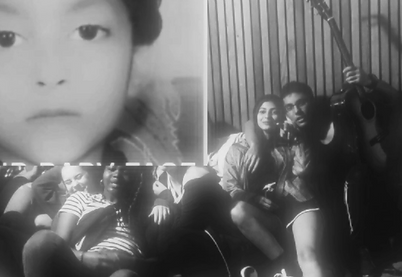
I used black and white filters, blurred personal images, and handwriting overlays to distinguish this section. The pacing slows down, and there’s less sound overall. I was inspired by experimental autobiographical work from Chantal Akerman and Chris Marker, where simplicity holds weight. This section feels stripped back on purpose — not as polished as the rest, because I wanted it to reflect uncertainty, absence, and emotion without over-explaining it.

Fragments of Voice
These are real voices. Pieces of memory — fragile, vivid, contradictory.
Not all are clear. Not all are true. But they all left a mark.
"Someone said it didn’t happen that way... they laughed, like I imagined it."
"I wonder if I just needed that story… maybe to feel proud."
"How do you explain the way your body remembers?"
"That smell after it rains — petrichor — it instantly takes me back."
"Our first date felt like a film — wine by the canal, singing old songs."
"Algorithms don’t just show us memories — they shape them."
"I don’t know why I remember this — but I used to count the cracks on the ceiling."
"There’s a body mist I used in 7th grade… I still remember everything when I smell it."
"We were singing old Bollywood songs near the canal. It felt like a movie."


All voices used with permission. Some identities kept anonymous for privacy.
🎬 Behind the Scenes / Process
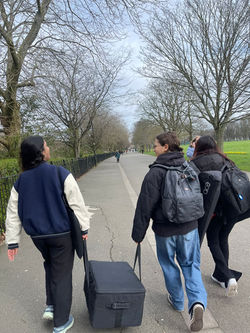 |  |  |  |
|---|---|---|---|
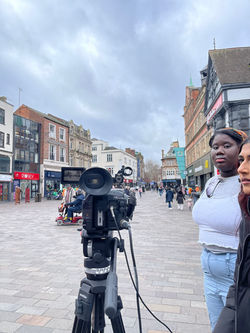 |  |  |  |
 |  |
🔹 Interview Process
To collect stories, I posted an open call on my Instagram story instead of asking individuals directly. I wanted participants to feel free and not pressured — especially those who knew me personally. Those who were interested emailed me voice recordings, responding to a set of memory-based questions I had prepared. This method gave them space and privacy, and helped me avoid direct or uncomfortable situations.


Instagram story posted to invite voluntary participation. This allowed people to opt in without pressure.
🔹 Tools & Editing
The main editing was done using Premiere Pro, where I experimented with filters, timing, sound effects, and transitions. Canva was used to design collage-style visuals and layout drafts, while CapCut helped with basic audio cutting and organization. I chose Premiere Pro because of its painterly and motion effects, which allowed me to visually reflect the fragmented and emotional tone of memory.


🔹 Visual Approach
For certain chapters, I created digital paintings using procreate, screen-recorded them, and then sped up the process to visually represent memories forming or being recalled. Other chapters used scrapbook layouts and video tape glitch effects to create contrast between styles of remembering — imagined, sensory, and inherited. These visuals were inspired by artists like Maya Deren, Laia Abril, and digital zine aesthetics.

.png)
.png)
.png)
Posters & Visual Experiments


These poster designs reflect the fragmented, emotional, and distorted nature of memory explored in the film. I combined AI-generated imagery with personal editing techniques in CapCut and Canva — including blur effects, texture overlays, and red handwritten captions. Some visuals emulate VHS noise or painterly disintegration, while others use layered typography to evoke absence, trauma, and emotional residue. The glitch textures and dissolving edges reflect the film’s core themes: what is remembered, what is lost, and what is reshaped. Designed with online display and gallery exhibition in mind, several posters will be printed and mounted using red thread or transparent layers to continue the motif of stitching fragmented experiences together.
 |
|---|
 |
 |
 |
 |
 |
 |
 |
 |
|
|---|
|
|
|
|
|
|
|
|
Exhibition References & Visual Inspiration
This exhibition design draws heavily from a range of visual, tactile, and conceptual references that helped shape how Fragments of Memory lives beyond the screen. Each reference was chosen to reflect the film’s core themes: fragility, disorientation, stitching together identity, and the haunting texture of recollection.
“Fragmented Memories in Red Thread” (AI Visual Reference)

This reference inspired the entrance installation of my exhibition. I will print out a selection of my designed posters — many featuring distorted faces, glitch overlays, and red handwritten text — and stitch them together vertically using red thread. Rather than fabric, the posters themselves become the material of memory, fragmented yet reconnected through hand-threaded seams. This stitched-together curtain will act as an immersive threshold for the viewer, both visually and symbolically — referencing the act of piecing memories together and walking through their layers.
Non ho più amato nessuno (Stitched Couple Image)
This artwork, featuring a black-and-white image sewn through the middle with red embroidery, embodies the intimacy and pain of loss. It informs how I will treat smaller visual moments on the exhibition wall — printing images and stitching them together to suggest emotional rupture and repair. It reinforces the tension between connection and absence, central to personal and inherited memories.

Pinterest Reference: "A Subversive Stitch"
source unknown.

The piece shows red thread densely over text, suggesting erasure, censorship, or memory distortion. It inspired how I will incorporate thread as both material and metaphor — not just as neat seams, but also as chaotic, emotional overflow. I plan to have loose threads hanging, suggesting unfinished thoughts and memories too tangled to contain.
Hanging Projections on Torn Fragments (Pinterest)
This reference — of black-and-white portraits projected onto jagged fabric pieces — encouraged my idea of suspended, irregular photographic displays. I want parts of my film or memory images to "hang in air," destabilised and softly shifting, reminding viewers that memory is not fixed — it flickers.
.jpg)
Natural History by Lori Vrba (Antler Hanging Photos)

This sculptural display of photographs delicately strung from antlers influenced my vision of an archival, personal memory tree. I will interpret this by suspending small prints from wire or thread, potentially arranged across found materials or branches. These will represent memories passed down, hanging in time, waiting to be processed.
“Disintegrating Memory Portraits” (AI silhouette with photo fragments)
This portrait dissolving into floating photo squares will serve as inspiration for a final cut-out installation. I plan to enlarge a similar figure and collage on top of it using stills from my film and unused memory visuals. This acts as a focal point on the wall — a body built from fractured recollections. Together, these references help me translate digital memories into physical presence, inviting viewers into a space where they don’t just see memory, but feel its weight, distortion, and vulnerability.

Creative Development: How the Project Evolved
This project went through multiple stages of transformation — both conceptually and practically — before arriving at its final form. Originally, Fragments of Memory began as an idea for a rap music video exploring memory through glitch edits and rhythm. The initial plan was much more performance-based, focused on stylisation and speed. But as I began researching memory more deeply, I realised the topic needed space, slowness, and a more emotional, layered structure. This was the first major shift: the project evolved into a poetic multimedia short film.
At first, I planned to conduct face-to-face interviews, but after considering safety, comfort, and accessibility (especially when reaching out to people online), I changed my method. Instead, I shared a callout on Instagram and allowed participants to submit voice notes anonymously via email. This turned out to be one of the most impactful decisions — people shared more honestly, and I was able to choose and edit the audio more freely without pressure or performance.


One key turning point came during editing: listening back to all the interviews and noticing how emotionally charged small fragments could be — the smell of rain, a forgotten laugh, a made-up memory. I realised that instead of long clips, I could structure the film as short flashes of emotion and voice, collaged and layered to mimic how memory actually feels. This changed my approach to pacing, sound design, and the overall structure of the film.
Overall, Fragments of Memory evolved from a music-driven concept into a personal, non-linear reflection on how memory distorts, drifts, and shapes us. Every change — from the tools I used, to the voices I collected, to the way I chose to present visuals — was about making the film feel more human, more intimate, and more fragmented in a way that felt real.
Early in the editing stage, I used a VHS video tape effect across most of the film — layering it throughout the collage sections after the scrapbook. But after feedback, I recognised that this visual repetition weakened the emotional contrast between the film’s themes. I then restructured the film to include more variation: scrapbook visuals, hand-painted animations, glitchy silhouettes, and soft collage effects, each assigned intentionally to specific chapters. These shifts made the chapters more distinct and emotionally resonant.
The theme of inherited memory wasn’t a strong focus at the beginning, but it gradually emerged from the interviews and became a core element in Chapter 3. Similarly, my own personal reflection wasn’t part of the original plan, but as I worked through editing others’ stories, I felt a need to add my own voice — a quiet thread of uncertainty that tied everything together. This became the final reflective chapter, created in black and white with minimal sound to distinguish it stylistically.
